
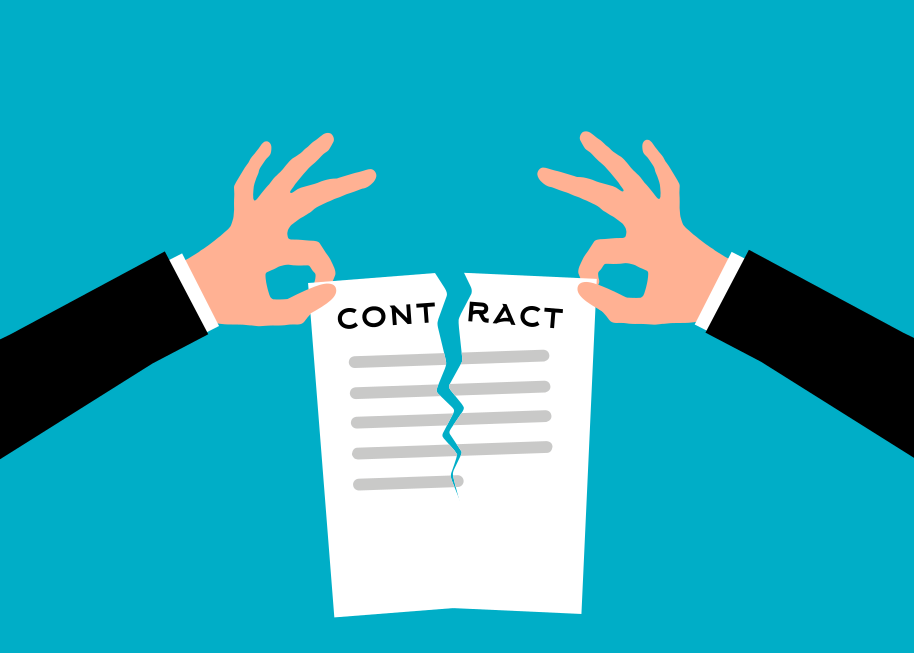
At one time, incorporating a business once profits reached a modest level was almost the default advice. Today, the conversation is more nuanced, and some existing company owners may even be asking themselves, “Do I still need a limited company?”
The question may be prompted by rising tax bills caused by reductions to the dividend allowance and increases in dividend tax rates. In some cases, it may now be more tax effective to trade as a sole trader rather than as a limited company. However, tax is only one part of the picture.
This article looks at some of the key factors involved in disincorporating a business that can help you decide whether this is something you need to look at.
Loss of limited liability
A limited company is a separate legal entity. While this does not eliminate all risks, it does provide a layer of protection between the business and your personal assets. As a sole trader, that protection is not there. That means if something goes wrong, you could be personally exposed. For some businesses, this risk is low and can be well insured against. For others, limited liability remains a compelling reason to stay incorporated even if there are few tax savings.
What happens to the company’s assets?
Because of the separate legal status that a company has, disincorporation involves assets moving from the company to the shareholders personally. This is an issue when property or goodwill is being transferred. The transfer will normally be considered to take place at market value with corporation tax payable, even if no money has changed hands. This is a key reason why disincorporation needs careful planning rather than a quick decision.
How about VAT?
Ordinarily, when a VAT-registered business sells an asset, the sale will be subject to VAT. In many cases, the transfer of a business from a company to an individual can qualify as a transfer of a going concern. If the conditions are met, then VAT is not chargeable. Of course, meeting those conditions is vital to avoiding a problem and an expensive VAT bill.
How is the company closed?
Besides moving the trade out of the company, the company itself also needs to be closed down. In some cases, a members’ voluntary liquidation may be the best way to do this. This can be relatively costly and involves an insolvency practitioner. However, for smaller companies, a voluntary strike-off can work. This is relatively cheap and straightforward. The method of closing down the company also affects how reserves or retained profits that are distributed to the shareholders are taxed.
Ongoing tax position after disincorporation
As a sole trader or partner, profits are taxed as they arise. In other words, there is no ability to time when you extract income from the business, or to retain profits in the business at a lower tax rate while you are growing it. Some find the cash flow effect of the tax payments difficult to manage because of the account system that applies to sole traders and partners.
Commercial and practical considerations
Tax aside, disincorporation can affect contracts, banking arrangements and financial agreements, professional registrations and insurance, and how the business is perceived by customers and suppliers. Before considering disincorporation you should ascertain whether your customers are happy to deal with a sole trader rather than a limited company; this can be a particular issue for businesses trading to public sector bodies.
Is disincorporation a good idea for you?
As you can see, disincorporation is not just the reverse of incorporation. The tax system makes it easier to go into a company than to come back out. If you are thinking about it, make sure to take the time to work through the numbers as well as the mechanics of the process.
If you would like personalised advice on how disincorporation may or may not benefit you, please feel free to get in touch. We would be happy to work through the numbers and the mechanics of the process with you!